
Messages from Our Honorary Advisors

Appreciation for RAR Institute
I would like to extend my deepest gratitude to Mr. Kaisayr Husein, a remarkable convener and visionary behind the RAR-Institute. His hard work and dedication to empowering Rohingya youth through education, research, and discourse on critical global issues are truly inspiring. The RAR-Institute has become a vital platform for nurturing young minds, equipping Rohingya youth with immense knowledge of international humanitarian law, research methodologies, and other essential thematic areas.
It is both an honor and a great privilege to be invited as a facilitator and lecturer in this commendable institute, where many passionate young scholars from across the world come together to engage in meaningful discussions. Mr. Kaisayr’s commitment to nurturing intellectual growth and advocacy within the Rohingya community is not only commendable but transformative. His leadership has created a space where ideas flourish, perspectives are broadened, and future changemakers are nurtured.
I deeply appreciate the opportunity to contribute to this noble initiative and to be part of a movement that empowers young Rohingya voices in the global academic and policy discourse. Mr. Kaisayr, your efforts are a beacon of hope, and I look forward to continued collaboration in this important work. Thank you for your tireless efforts, dedication, and commitment to making a difference in the Rohingya community.
Prof. Dr. Israel Nyadera
• Research Associate
• Center for Conflict, Development and Peacebuilding
• Geneva Graduate Institute
Appreciation for RAR Institute
Since my years as a Rohingya researcher based in the Philippines, I have met several Rohingya youth who have shown remarkable determination, positivity, and hope. One of them is Brother Mr. Kaisayr. I am honored that he invited me to speak on qualitative research for his students, and I am deeply moved by their keen interest in critically exploring Rohingya issues, their place in the world, and the realities they face.
Mr. Kaisayr is an inspiration for the Rohingya generation in Myanmar, Bangladesh, and beyond. He has achieved so much for the Rohingya community, and I am forever grateful for his dedication and remarkable journey.
The world needs individuals like Mr. Kaisayr, who, among many Rohingya, continue to drive and inspire the younger generation of Rohingya scholars in Bangladesh and Southeast Asia.
Prof. Wendell Glenn P. Cagape
PhD Educ., PhD SEAS, FRAS
Social Science Researcher and a Rohingya Rights Advocate
Centro Escolar University


Appreciation for RAR Institute
Before meeting these wonderful students, I had several encounters with Mr. Kaisayr, and I found him to be truly amazing. That gave me an idea of what the research students he is mentoring at RAR would be like. Lo and behold, my thoughts about them have been overwhelmingly confirmed.
After a few sessions with them, I have come to realize that they are young students driven by an immense hunger for success. They are hardworking and relentlessly pushing forward to achieve their goals. What is truly mind-boggling is how they continue to thrive despite the difficult circumstances and injustices they face—many of them living in fragile tents and neglected camps.
Given the chance and opportunity, they will stand shoulder to shoulder with students from anywhere in the world.
Dr Mohammed HASHIRU
PhD in International Relations
A Researcher & IBDP Instructor of Theory of Knowledge at Gazi University Foundation School
Appreciation for RAR Institute
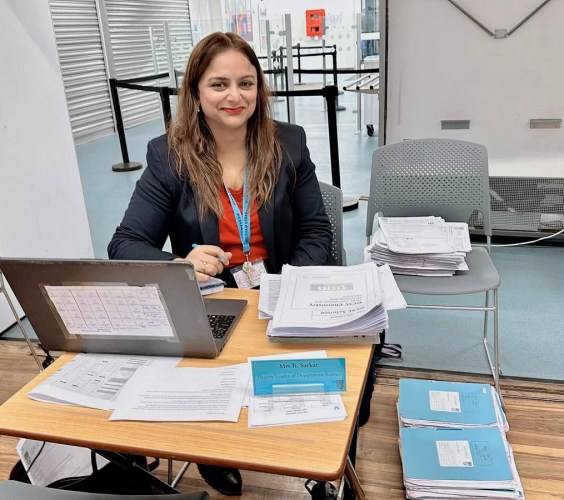
I am honored to be part of the RAR Institute as a lecturer, where I have had the opportunity to contribute to knowledge-sharing, academic development, and international collaboration. My experience with the Institute has been deeply rewarding, as it has allowed me to engage with talented colleagues, students, and global partners in advancing research and education.
I sincerely appreciate the continuous support, cooperation, and trust extended to me by the RAR Institute leadership council, my fellow faculty members, and the wider academic community.
This collaborative environment has enriched my professional growth and strengthened my commitment to fostering innovation and excellence in education.
At present, I am also affiliated with (RAR/M.S University of Baroda, Gujarat/SAT KAIVAL TRUST SARSA, Anand, Gujarat, India/READING University,UK/Wexham Secondary School,UK) where I continue to contribute to teaching, research, and academic initiatives while actively collaborating with the RAR Institute on various projects.
Regards,
Prof. Rupali Sarkar
Appreciation for RAR Institute
I would like to begin by expressing heartfelt gratitude to Mr Kaisayr Husein and the entire leadership council of RAR Institute for building a platform where education becomes borderless, providing digital access to vulnerable populations like the Rohingya refugees. My connection with the Rohingya community spans over seven years, formed through fieldwork, observation, and the study of articles and books.
What inspires me most about RAR Institute, is seeing research methodology as the main focus which will eventually give wings to countless dreams, in empowering individuals to pursue their own independent research. I am continually moved by the Rohingya’s keen desire to critically explore their own stories and effectively contribute their own research.
Mr. Kaisayr’s unwavering enthusiasm and dedication to such a courageous, noble cause is truly remarkable. I wish him every success in his mission to become an educational leader, making a transformative difference for the Rohingya community especially for students aspiring toward brighter futures. To Mr Kaisayr, his teams and all the students, may you keep moving forward and keep growing together. Thank you once again for your vision and commitment and for inviting me to conduct weekly lecture on Research methodology at RAR institute.
Regards,
Aasima Banu Sheikh
Faculty of Dept. of Political Science,
Lilong Haoreibi College, Manipur University, India.
Appreciation for RAR Institute
It is my great privilege to express my deepest appreciation for the Rohingya Academic Research Institute (RAR-Institute). The Rohingya youth are denied access to formal education, RAR-Institute stands as a symbol of resilience and hope, creating opportunities for learning and research against all odds. By offering structured learning and mentorship, Mr.Kaisayr along with many scholars, including professors, academics, experts, researchers from different universities, institutions and colleges and the RAR-Institute create pathways that formal institutions have failed to provide.
Drawing from what I have learned through my academic journey in Germany and Thailand, I am now teaching RAR-Institute students with the vision that they too can access quality education. My experiences from the classroom at the Asian Institute of Technology to the summer school in Leipzig, and teaching in the Karen refugee camp have shown me that knowledge should not be confined by borders or privilege. All refugee youth should have the right to education.
Through my teaching experiences with Karen refugee students and RAR-Institute students, I have witnessed the remarkable determination of refugee young people who continue to pursue knowledge despite systemic barriers. Their curiosity, discipline, and passion remind us that all refugee youth should have access to education. Education is not a privilege, but a fundamental human rights that restores dignity, builds confidence and empower refugee youth to shape their future.
Regards,
Shwe Yi Myint Myat
– PhD Scholar (Asian Institute of Technology)
– Instructor (Rohingya Academic Research Institute)
– Royal Thai Government Scholar | DAAD Scholar


Appreciation for RAR Institute
I wish to take a moment to acknowledge the outstanding work of Mr. Kaisayr Husein and the remarkable journey of the RAR-Institute. What began as a vision has grown into a dynamic platform that uplifts Rohingya youth by equipping them with essential knowledge, skills, and the confidence to engage with pressing global challenges.
Through its programs on international humanitarian law, research, and critical academic themes, the institute has become a space of empowerment and transformation.
My recent experience with the RAR-Institute as a lecturer has been both humbling and rewarding. The enthusiasm, curiosity, and commitment of the young Rohingya participants were truly inspiring. Their eagerness to learn, to debate, and to imagine a better future stands as a testament to the institute’s impact.
This achievement would not have been possible without the leadership and tireless dedication of Mr. Kaisayr. His work does not only shape an academic initiative but also nurtures hope, resilience, and advocacy within a community that continues to face immense challenges.
I remain grateful for the invitation to be part of this meaningful effort, and I commend the RAR-Institute for its unwavering commitment to knowledge, empowerment, and justice.
Regards,
Muhammad Fahim
Doctoral Research Fellow
Monash University, Australia
Appreciation for RAR Institute
Recently, I had the opportunity to give a talk on the smart use of AI tools in academic writing at the request of Mr Kaisayr Husein, Founder of the Rohingya Academic Research Institute.
I was truly moved by the enthusiasm and dedication of the emerging researchers he leads in Rohingya community. Their intellect, motivation to learn, and sincerity left a lasting impression on me.
I would like to express my heartfelt gratitude and appreciation to Mr Kaisayr for his outstanding leadership and community service in nurturing young minds and shaping future researchers and leaders.
I firmly believe that together, we can make the world a better place for learning and growth.
Regards,
Dr. Fida Ahmed
Director ORIC, University of Turbat (Pakistan)


Appreciation for RAR Institute
My interest in serving at the Rohingya Academic Research Institute (RAR-Institute) stems from a deep scholarly and humanitarian commitment to migration, citizenship, and human rights. Over the past decade, my academic and professional trajectory has been devoted to understanding—and transforming—the structural inequalities that define the lives of displaced and stateless populations. As a long-standing Board Member (2018–2025) and current Treasurer of the International Political Science Association’s Research Committee 46 (RC-46: Migration and Citizenship), and Chair of the Best Paper Award Committee of the Human Rights Section of the American Political Science Association, I have engaged extensively with global debates on forced displacement, statelessness, and the politics of belonging. These experiences have given me both a theoretical and practical appreciation for what RAR Institute represents: a sanctuary of intellectual resistance and a site of knowledge reclamation for one of the world’s most marginalized communities.
Working with RC-46 has continually reinforced my belief that migration must be understood not merely as movement across borders, but as a moral and political question—one that interrogates global hierarchies of power, access, and identity. It is from this perspective that I approach my prospective role at RAR Institute. Teaching Rohingya migrants is not an act of charity; it is a profound act of epistemic justice—a restoration of voices that have been systematically silenced by the architecture of displacement.
I have been profoundly inspired by the Rohingya learners’ unrelenting zeal to learn despite their exclusion from formal education. Their intellectual hunger, ethical clarity, and resilience transcend institutional credentials. They exemplify what I consider the truest form of scholarship: learning as survival, education as resistance. My teaching philosophy, shaped by both sociological and anthropological training, centers on cultural relativism, inclusive pedagogy, and dialogical learning—ensuring that every student’s identity, culture, and experience are valued on their own terms, not in comparison to others.
At RAR Institute, I hope to continue offering interdisciplinary courses on migration governance, human rights, decolonial thought, and postcolonial citizenship, engaging students in critical debates that connect their lived realities to broader global structures. My commitment is to create a transformative learning space—one where the Rohingya are not taught about themselves but rather empowered to theorize and articulate their own social and political futures.
Joining RAR Institute is, for me, both a professional fulfillment and a moral duty. It aligns with everything my scholarship and service have stood for: advancing human dignity, democratizing knowledge, and affirming that education—even in exile—remains humanity’s strongest instrument of freedom.
Dr. Pelekeh H. Tapang
• PhD. Political Science and Public Administration
• Chairman: American Political Science’s Human Rights Section Best Research Paper Award
• Board Member: International Political Science Association’s Research Committee – 46
